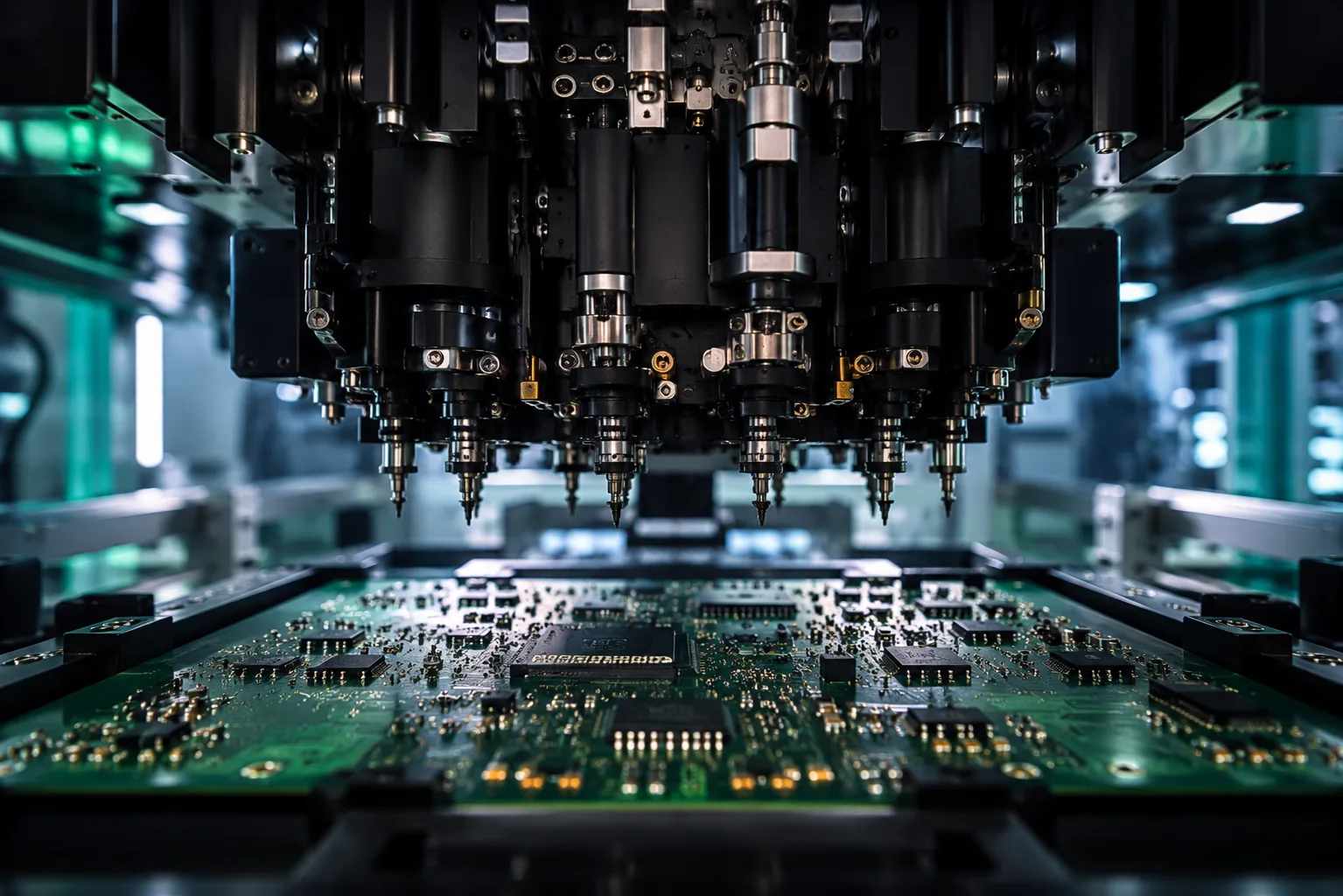
Our PCB assembly services are designed for builds where accuracy, repeatability, and functional reliability are critical.
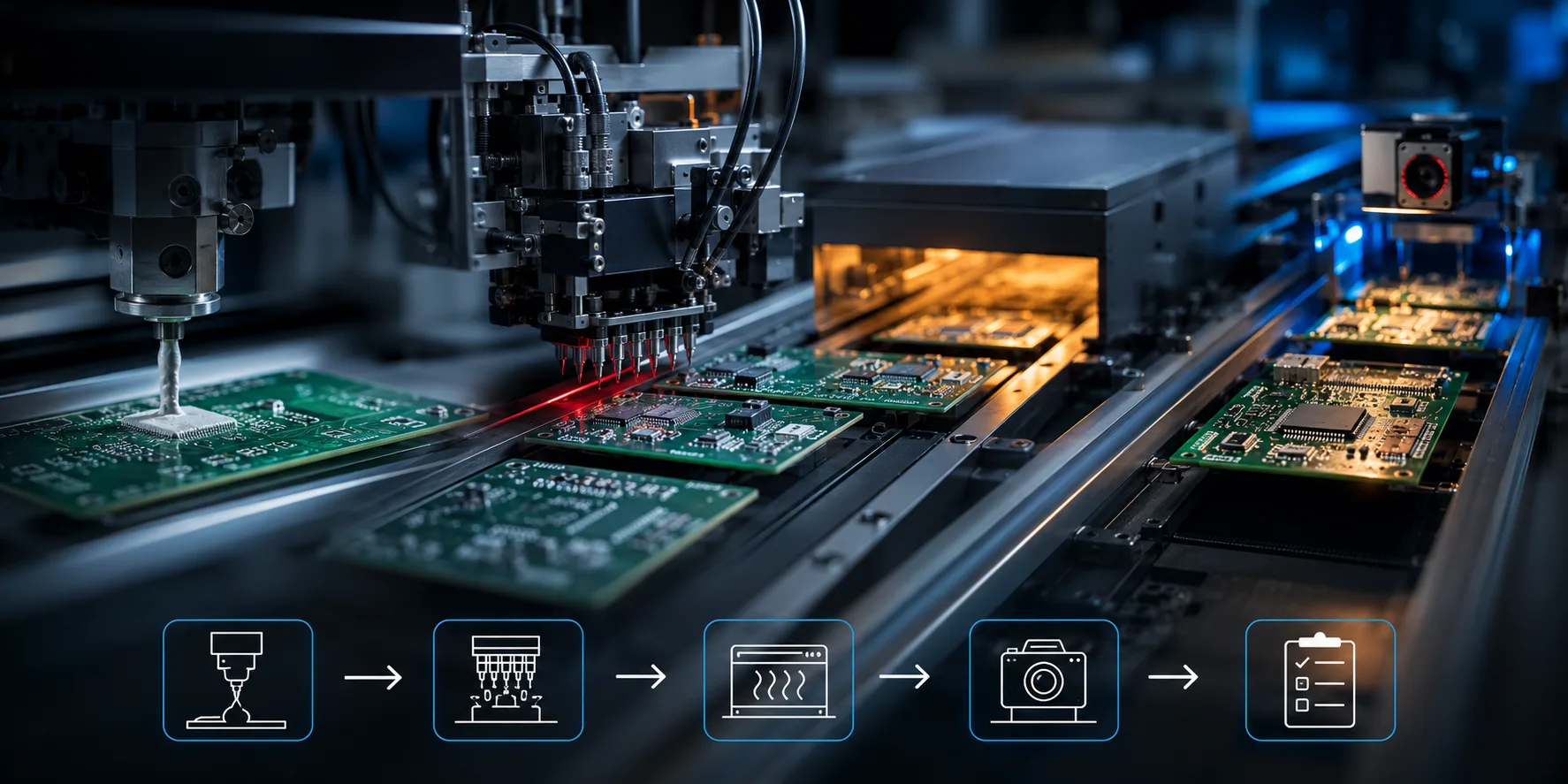
Assembly is not treated as a standalone activity.
This ensures that assembled boards are not only complete - but functionally stable and production-ready. Assembly readiness is validated through our PCB Design Review & DFM services before production.
// We support
- Engineering prototypes
- Pilot production runs
- Low-to-medium volume builds
// It is aligned with
- PCB design constraints
- Component characteristics
- Validation and testing requirements
Technical Specifications
We support Surface Mount Technology (SMT), Through-Hole Technology (THT), and mixed assemblies.
Assembly Types
- Surface Mount Technology (SMT)
- Through-Hole Technology (THT)
- Mixed technology assemblies
Component Handling
- Fine-pitch components
- BGA and dense packages
- Double-sided assembly
- High component density layouts. Components are sourced and validated through our BOM Risk and Optimization services to reduce supply risks.
Build Types
- Prototype and engineering builds
- Pilot production
- Low-to-medium volume manufacturing
Supported Parameters
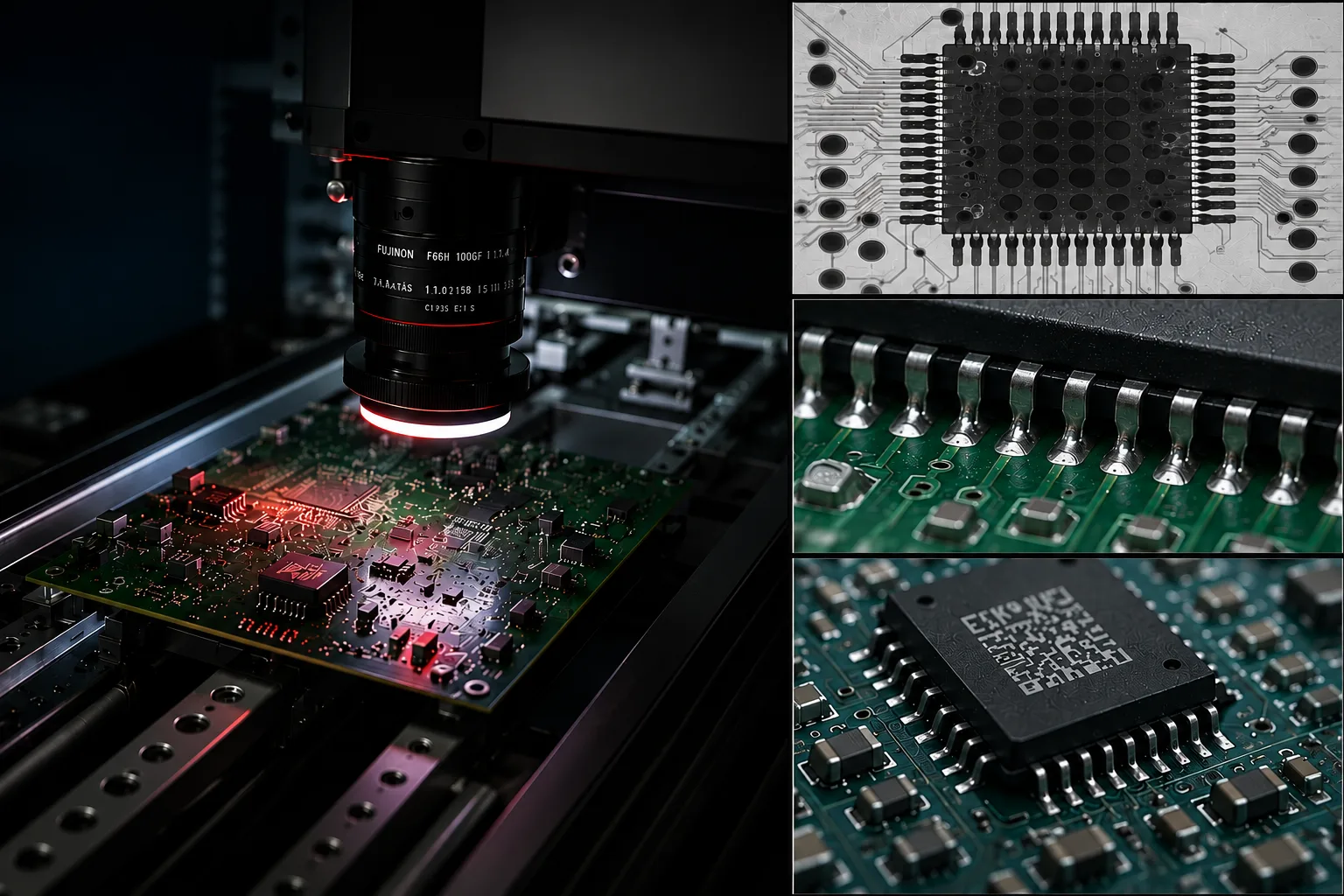
Quality & Inspection
Assembly quality is ensured through defined inspection workflows and process control.
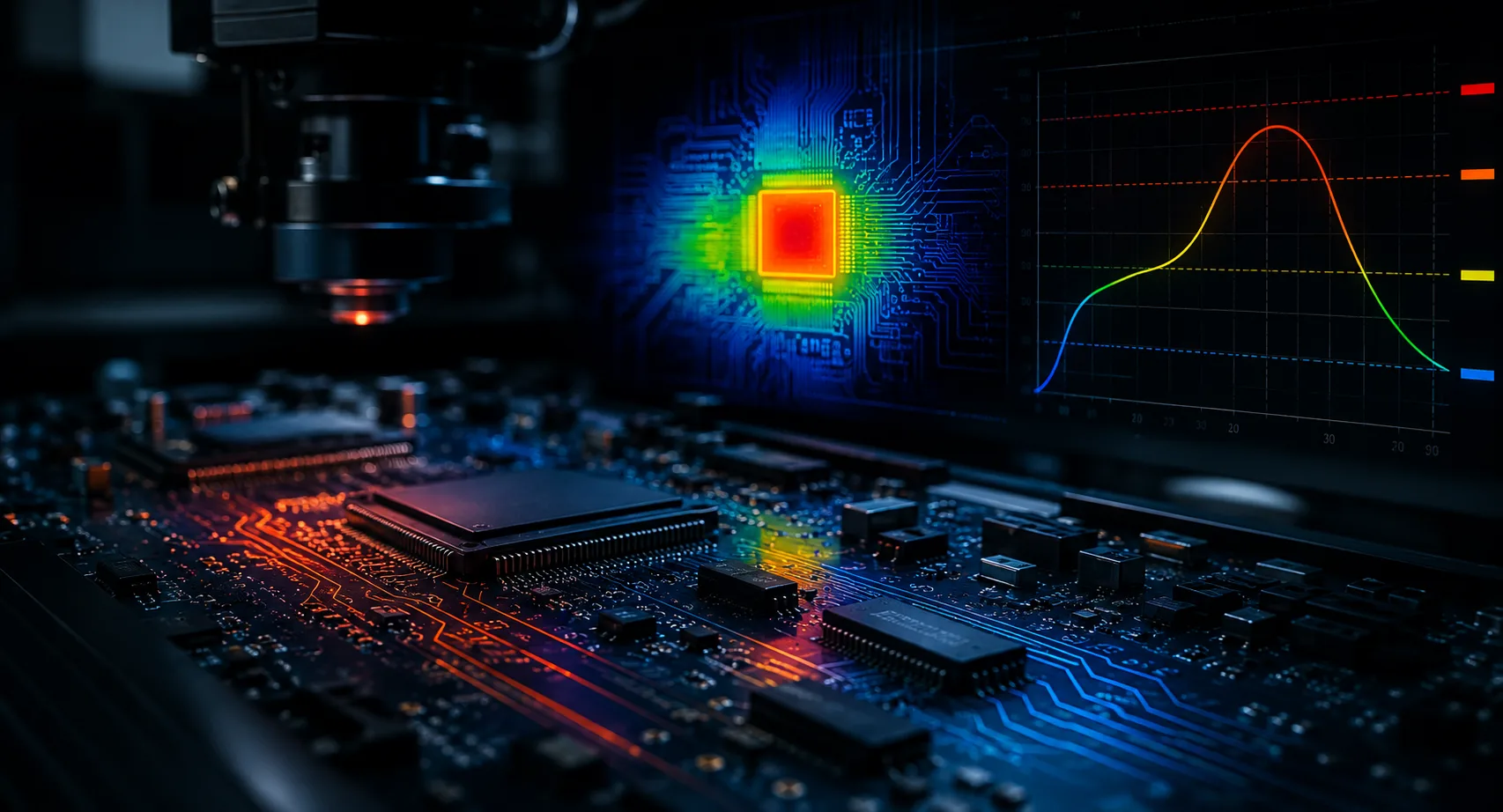
Engineering Considerations
Assembly planning is driven by engineering validation rather than process assumptions.
Design Alignment
- Design-for-assembly (DFA) review
- Component placement feasibility
- Spacing and accessibility for assembly
Thermal & Process Considerations
- Reflow profile alignment
- Thermal sensitivity of components
- Solder joint reliability
Test Readiness
- Test point accessibility
- Fixture feasibility
- Validation planning
Risk Identification
- Component-related risks
- Assembly constraints
- Potential reliability issues
This integrated approach reduces:
Component Sourcing Approach
Assembly can be supported through multiple sourcing models depending on project requirements.
Client-Supplied Components
Procure and supply your own components directly for assembly.
Partial Sourcing Support
We source critical, long-lead, or local parts, while you supply the remaining bill.
Full Sourcing Under Turnkey Model
Complete supply chain ownership including procurement, verification, and execution.
Supply Chain Validation Criteria
All sourced components undergo engineering validation to prevent assembly blockages and ensure manufacturing reliability. We rigorously evaluate:
Applications
Where our execution makes a difference
IoT & Connected Devices
High-density SMT assembly for small footprint, wireless, and power-optimized hardware.
Industrial Control Systems
Robust SMT and THT mixed technology assemblies built for process automation environments.
Instrumentation Electronics
High-fidelity analog and mixed-signal assemblies built with strict testing profiles.
Product Validation Builds
Precision assembly runs built exactly to spec to identify component tolerances early.
Pilot Production Programs
Scale-ready production runs with process traceability and yield audits.
Scope & Focus Areas
We clearly define our manufacturing limits to align engineering capabilities with execution quality.
Supported
Scope.
- 01prototype to medium-volume assembly
- 02engineering-driven builds
- 03assemblies requiring validation and control
Out Of
Bounds.
- 01ultra-high-volume automated production
- 02cost-only driven assembly requirements
- 03fully self-service ordering workflows
Frequently Asked Questions
Clear answers regarding our process, capabilities, and execution boundaries.
Engagement Process
A structured, engineering-led workflow ensuring technical correctness from initial gerbers to export delivery.
Related Workflows
Turnkey PCBA
End-to-end component sourcing, fabrication, assembly, and validation.
PCB Design Review
Pre-production engineering analysis to optimize yield stability and prevent assembly defects.
PCB Layout
Translating schematics into high-yield, manufacturing-aligned board layouts.