How to Optimize Your BOM for Supply Chain Stability
A Practical Engineering Guide to Reducing Component Risk, Improving Sourcing Flexibility, and Building More Resilient Electronics Supply Chains
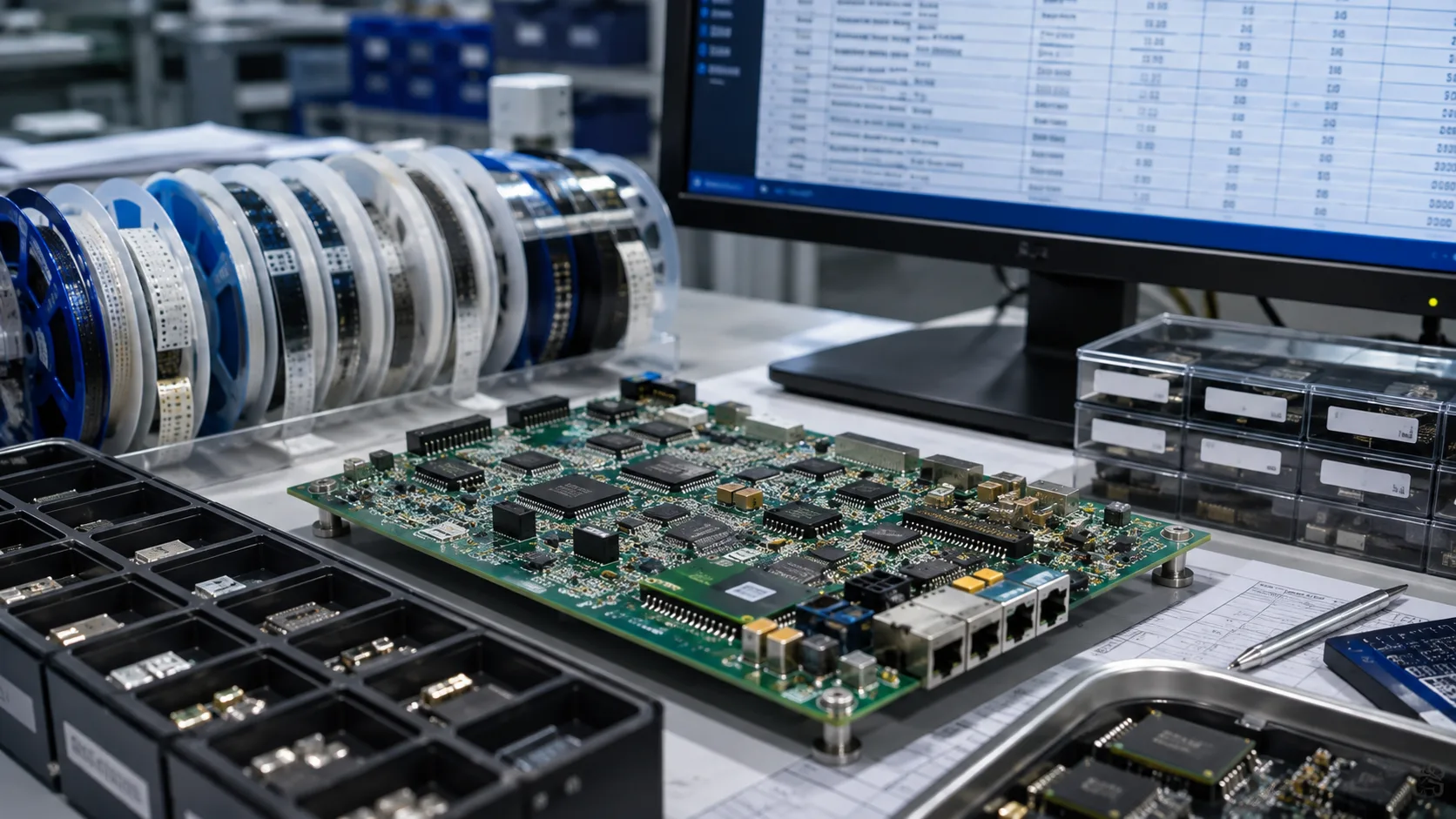
Feature IMAGE:
Introduction
A Bill of Materials is often treated as a simple list of components required to build a PCB assembly.
For engineering and procurement teams, however, the BOM is much more than that.
It defines the material inputs, specifications, sourcing constraints and commercial dependencies that ultimately determine whether a product can be manufactured repeatedly and economically.
A BOM can be technically correct and still create substantial manufacturing risk.
A component may be:
The result can be a familiar situation:
The PCB is ready. The factory is ready. The customer order is ready. But one component is preventing production.
Supply-chain stability therefore needs to be considered while the product is being engineered, not only when procurement begins.
A well-structured BOM should answer four questions:
What exactly do we need?
Can we source it reliably?
What happens if the preferred component becomes unavailable?
Can an alternative be introduced without compromising the product?
1. Why BOM Optimization Matters
A BOM connects engineering decisions to manufacturing reality.
Consider two hypothetical designs.
Design A
A critical IC is available from:
The component is technically excellent.
But if that device becomes unavailable, the production line may stop.
Design B
The same functional requirement is defined with:
Design B may have slightly more engineering work initially, but it has greater resilience.
This is the central principle:
The lowest-risk BOM is not necessarily the BOM with the cheapest individual components. It is the BOM that balances technical performance, availability, quality, lifecycle, sourcing flexibility and total manufacturing risk.
2. What Makes a BOM Supply-Chain Vulnerable?
BOM risk usually comes from a combination of factors rather than one isolated problem.
The most common risk factors include:
Single-source dependency
Only one manufacturer or source can provide the required component.
Long lead time
The component requires significantly more time to procure than the rest of the BOM.
Lifecycle risk
The component is approaching:
Limited distribution
The part is available through only a small number of authorized channels.
Highly specific requirements
The design specifies a component so narrowly that alternatives are difficult to qualify.
Package dependency
The electrical function may be widely available, but the selected package creates a sourcing constraint.
Regional availability
A component may be commercially available in one geography but difficult to procure in another.
Allocation
The manufacturer may restrict quantities during periods of supply constraint.
Counterfeit exposure
Components sourced through uncontrolled channels may introduce authenticity and traceability risks.
These factors should be assessed before the BOM becomes a production constraint.
3. The BOM Should Contain More Than Part Numbers
One of the most common weaknesses in electronics BOMs is insufficient component information.
A production-ready BOM should contain enough information for engineering, procurement and manufacturing teams to understand exactly what is required.
Depending on the product and procurement model, useful fields can include:
| BOM Field | Why It Matters |
|---|---|
| Reference Designator | Identifies where the component is used |
| Quantity | Defines build requirement |
| Manufacturer | Identifies approved source |
| Manufacturer Part Number | Defines exact component |
| Description | Provides human-readable specification |
| Package | Supports assembly planning |
| Value / Rating | Defines electrical requirement |
| Tolerance | Prevents unintended substitution |
| Voltage / Current Rating | Defines operating requirement |
| Temperature Rating | Important for application environment |
| Lifecycle Status | Identifies obsolescence risk |
| Preferred Supplier | Supports procurement |
| Approved Alternate | Improves sourcing flexibility |
| Datasheet | Provides technical reference |
| Notes | Captures special requirements |
For more complex programs, additional fields may include:
The objective is not to make the BOM unnecessarily complicated.
The objective is to make critical procurement and engineering information explicit.
4. Separate Technical Requirements From Commercial Preferences
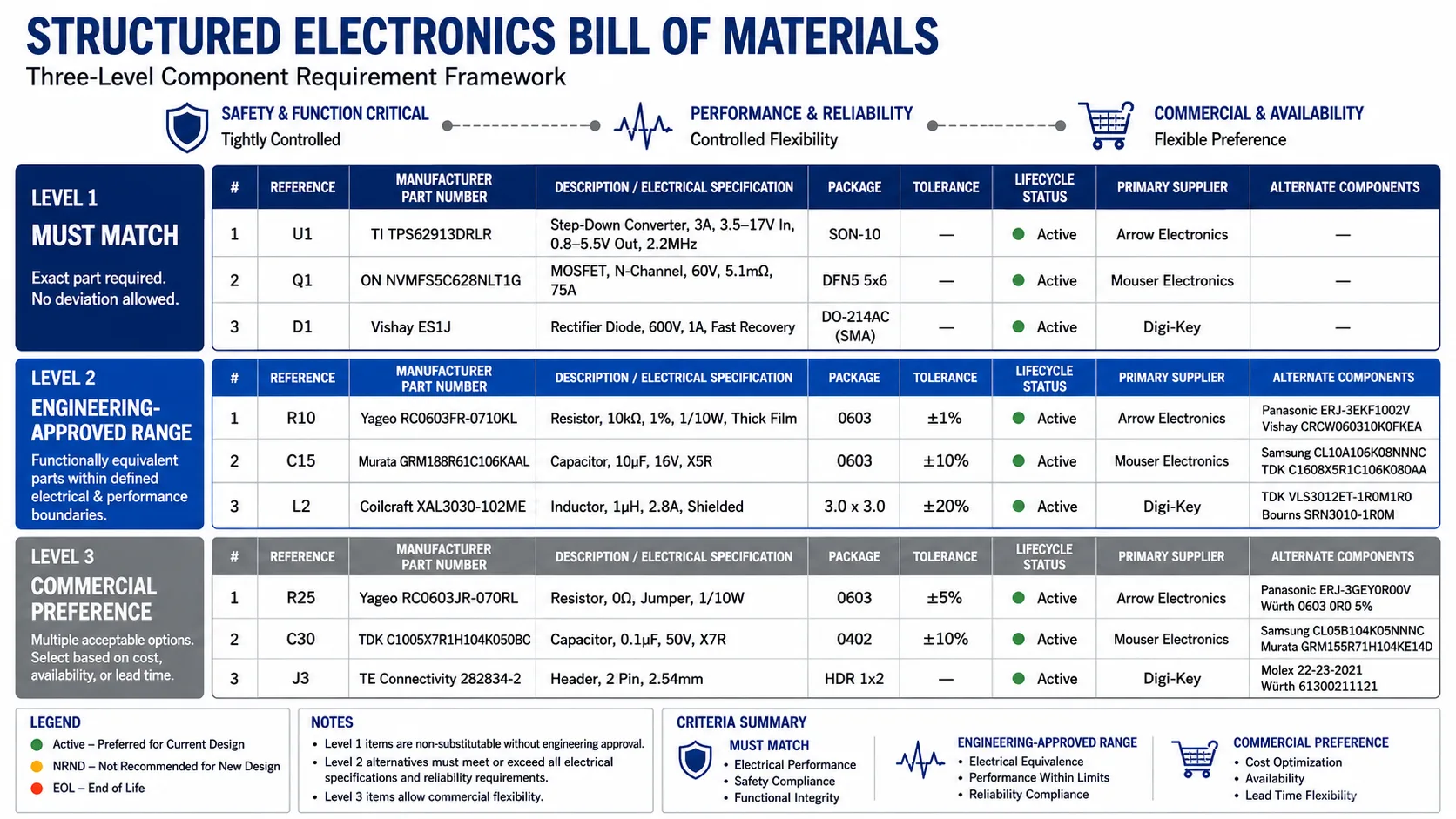
This is one of the most important principles in BOM optimization.
Not every characteristic in a component selection has equal importance.
Consider a capacitor specified as:
10 µF, 25 V, X7R, ±10%, 0603
Some of these characteristics may be fundamental to circuit performance.
Others may simply represent the original designer's preferred component.
If the BOM does not distinguish between mandatory technical requirements and preferred characteristics, procurement may have no safe basis for proposing an alternative.
A better approach is to establish:
Must Match
Parameters that directly affect circuit performance, safety or compliance.
Examples:
Can Vary Within Limits
Parameters where engineering-defined alternatives may be acceptable.
Examples:
Commercial Preference
Characteristics that influence sourcing but do not necessarily define functionality.
Examples:
This distinction makes alternate-component qualification substantially easier.
5. Build a Preferred Part and Alternate Strategy
A resilient BOM should not automatically treat every component as having only one acceptable part number.
Where technically appropriate, consider establishing:
Preferred Part
The component normally purchased and used in production.
Approved Alternate
A component that has already been technically evaluated and accepted.
Potential Alternate
A candidate that may meet the requirement but still requires engineering qualification.
This distinction is important.
A component appearing on a distributor's website does not automatically qualify it as an engineering substitute.
An alternate must be evaluated against the requirements that matter to the product.
6. What Should Be Checked Before Approving an Alternate?
A component may appear equivalent based on its headline specification but still behave differently in the actual circuit.
An alternate-component review may need to consider:
Electrical characteristics
Physical characteristics
Environmental characteristics
Manufacturing characteristics
Regulatory / compliance requirements
Depending on the application:
The key principle is:
Form, fit and function must all be considered—not simply the component's headline electrical value.
7. Don't Create an Alternate Without Checking the PCB
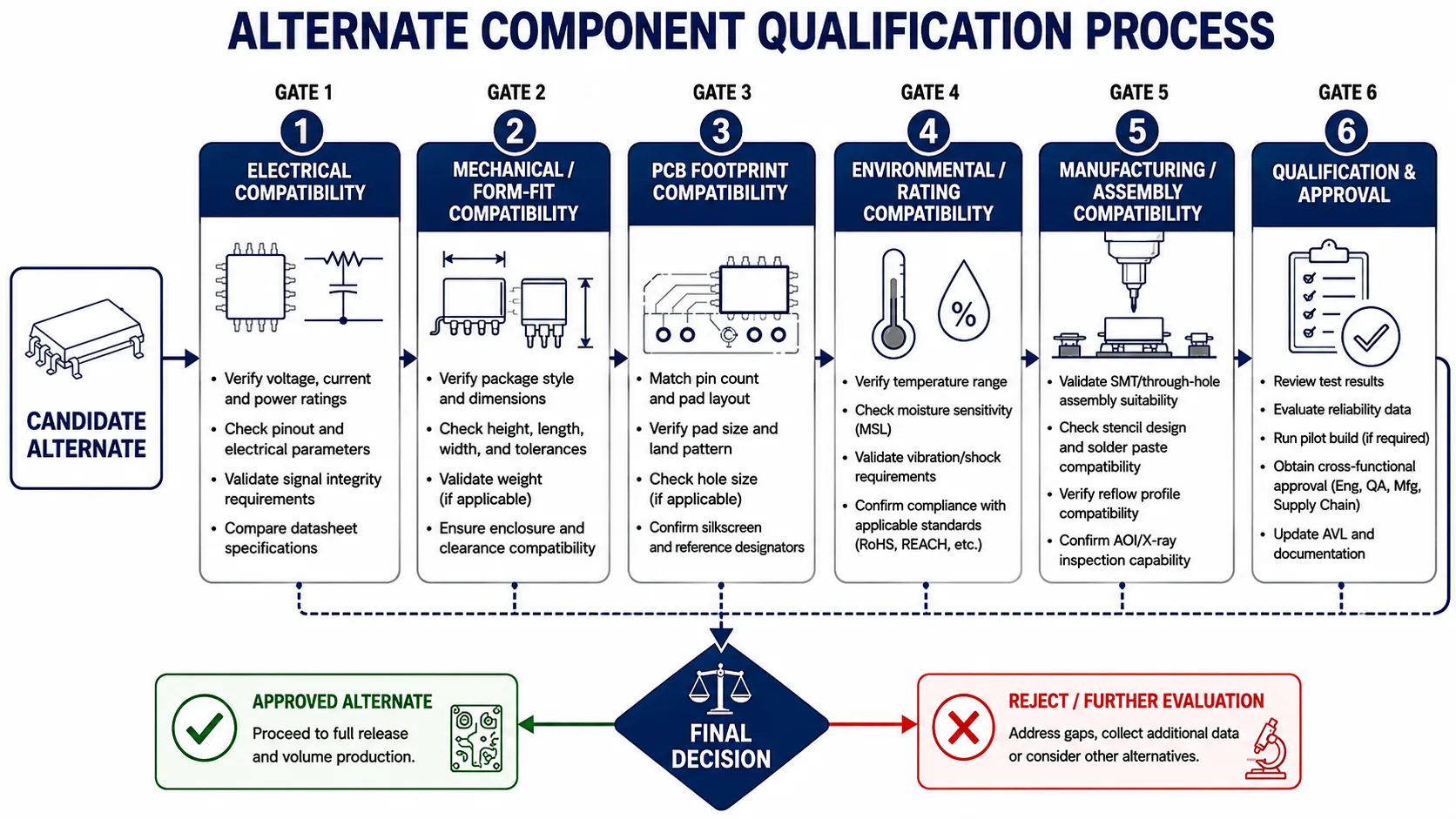
A component substitution can create a PCB problem even when the electrical specifications appear acceptable.
For example:
A replacement IC may have the same electrical function but a different:
Likewise, a capacitor or resistor with a different package size can affect:
Therefore:
Component alternate review
must connect with
PCB footprint review
and
Assembly process review.
8. Component Lifecycle Is a BOM Risk
A component's current availability does not guarantee future availability.
A product designed today may remain in production for several years.
That creates a lifecycle mismatch:
Product Life
may be significantly longer than
Component Life.
A BOM review should therefore consider:
This becomes particularly important for:
where products may remain in service for many years.
9. Don't Confuse Distributor Stock With Supply Security
A distributor showing thousands of units in stock may provide short-term availability.
It does not necessarily prove long-term supply stability.
Ask:
This distinction matters when planning production rather than simply purchasing components for one prototype.
10. Evaluate the BOM at Three Different Stages
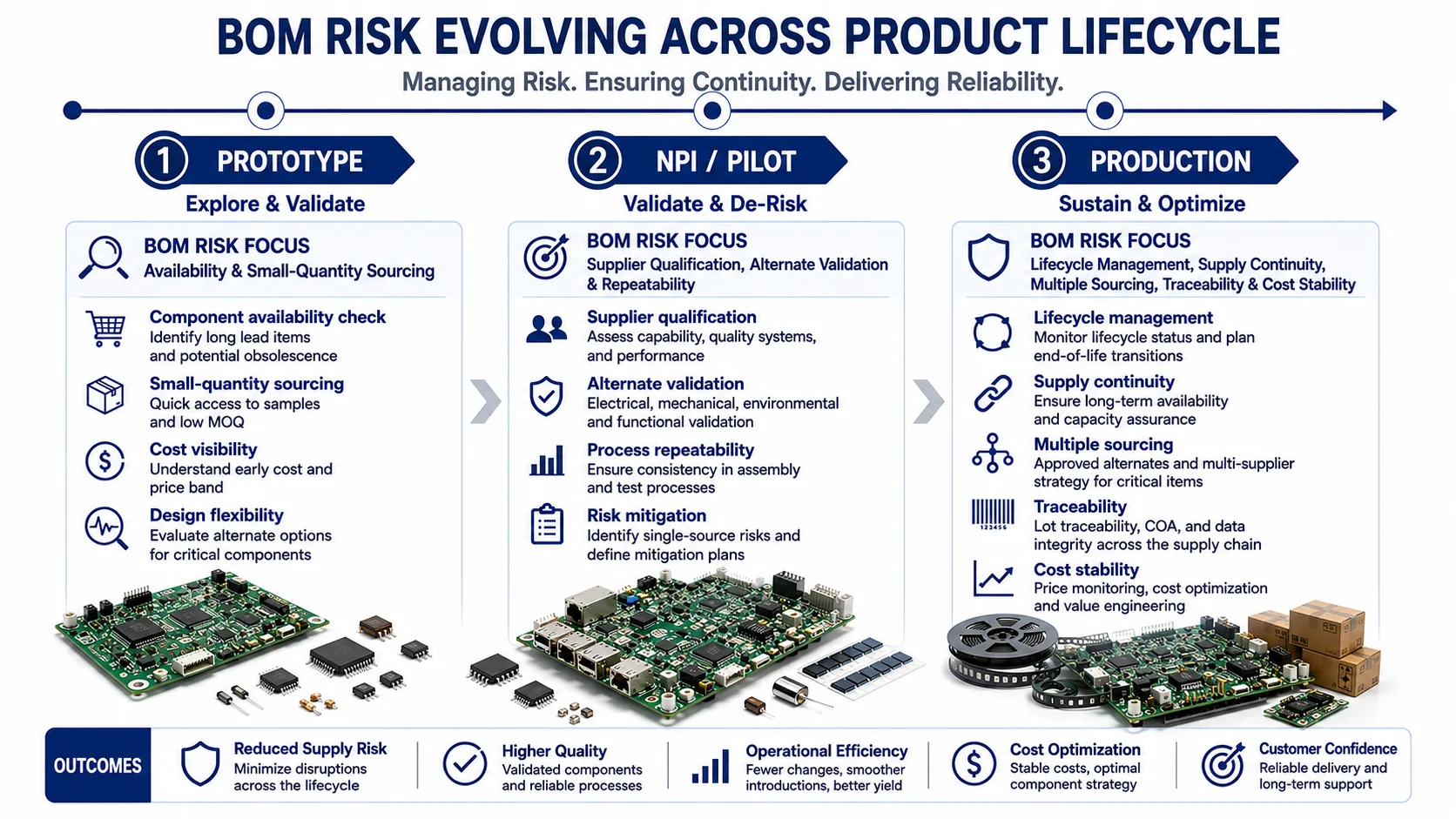
BOM risk changes throughout the product lifecycle.
Stage 1 — Prototype
Primary concern:
Can we obtain enough components to build and validate the design?
Stage 2 — NPI / Pilot
Primary concerns:
Stage 3 — Production
Primary concerns:
A component that is acceptable for a prototype may be inappropriate for a five-year production program.
11. Manage High-Risk Components Differently
Not every BOM line deserves the same level of supply-chain attention.
A practical approach is to classify components according to risk.
Low Risk
Multiple manufacturers and distributors are available.
Examples may include common:
Medium Risk
Some sourcing constraints exist.
Examples:
High Risk
Limited sources, long lead time, lifecycle concerns or significant qualification requirements.
Examples can include:
The exact risk classification should depend on the product and application.
12. A Practical BOM Risk Matrix
| Risk Factor | Low Risk | Medium Risk | High Risk |
|---|---|---|---|
| Qualified sources | Multiple | Limited | Single |
| Lead time | Short/stable | Variable | Long/uncertain |
| Lifecycle | Active | Watch | EOL/at risk |
| Alternate | Qualified | Candidate | None |
| Distribution | Broad | Limited | Restricted |
| Technical substitution | Easy | Requires review | Difficult |
| Production impact | Low | Moderate | Potential line stop |
A high-risk component does not necessarily mean it should be removed.
It means the component requires more deliberate risk management.
13. Avoid Over-Specifying the BOM
Engineers understandably want to control product performance.
But over-specification can unintentionally reduce sourcing flexibility.
For example, specifying a component by:
may eliminate components that are technically suitable.
Where appropriate, specifications can instead define:
Required performance → acceptable range → qualification requirements
rather than:
One exact commercial part number
This should never be done blindly.
For safety-critical, regulated or performance-sensitive applications, the exact component may genuinely be part of the design requirement.
The objective is controlled flexibility, not indiscriminate substitution.
14. Use Approved Vendor Lists Carefully
An Approved Vendor List can improve control, but it can also become a supply-chain constraint if it is too narrow.
A useful AVL should distinguish between:
For critical components, consider whether there is sufficient sourcing diversity.
A BOM that says:
Manufacturer: X only
may represent a substantially different risk profile from:
Manufacturer: X preferred; Y qualified alternate
provided both components genuinely satisfy the engineering requirements.
15. Traceability Matters
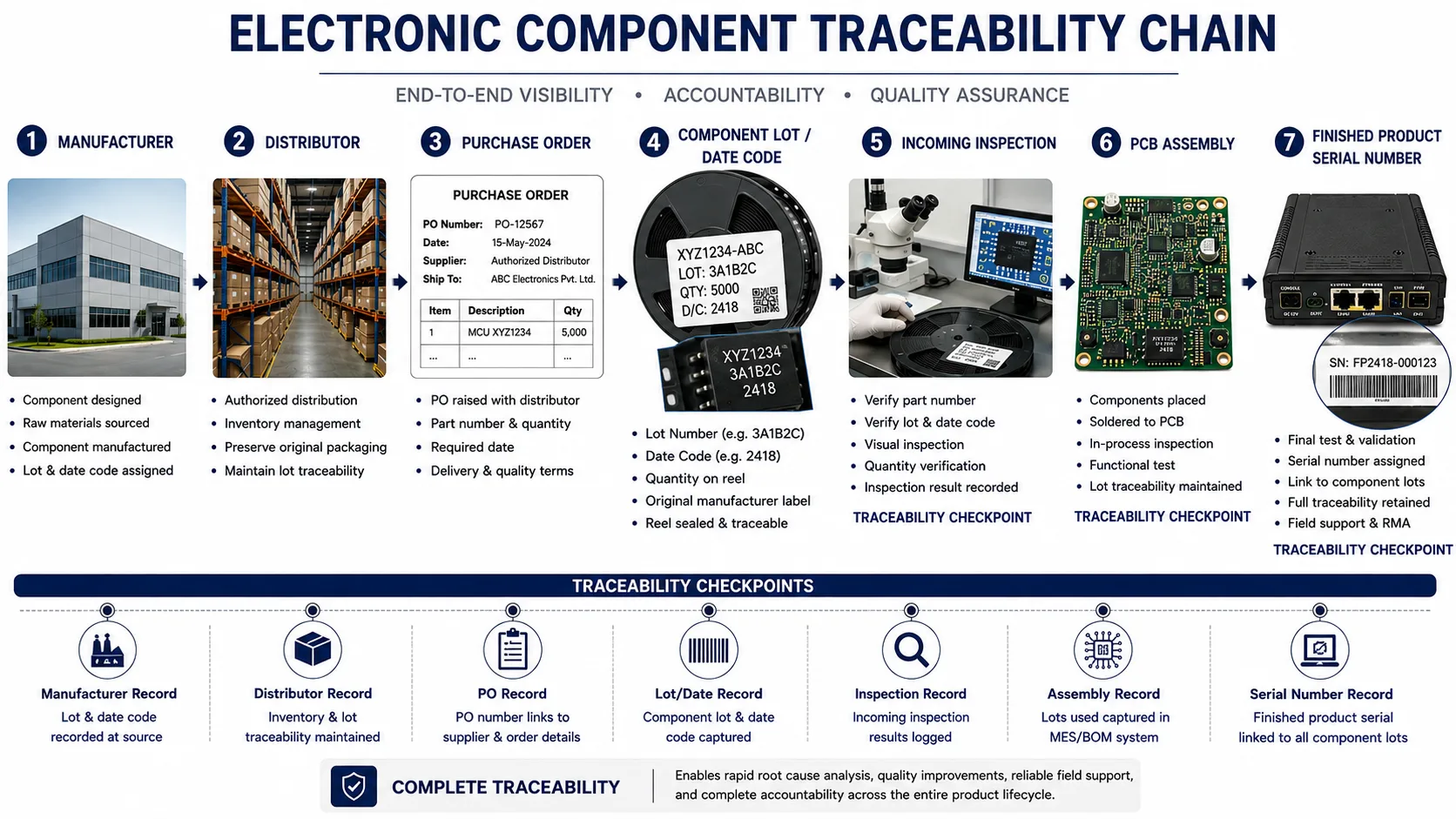
Supply resilience is not only about availability.
It is also about knowing what was actually purchased and installed.
For higher-risk products, traceability may include:
IPC-1782 addresses manufacturing and supply-chain traceability and uses a risk-based approach to determine appropriate traceability levels. The standard covers materials and processes and includes concepts such as material traceability and production records.
The appropriate level of traceability should be agreed according to product risk and customer requirements rather than applied identically to every product.
16. BOM Revision Control Is Supply-Chain Control
A BOM can be technically correct and still create manufacturing risk if revision control is weak.
The manufacturing team must know:
Which BOM revision is current?
And procurement must know:
Which component version is approved for that revision?
Changes should therefore be controlled.
Typical BOM changes may include:
Each change should have an appropriate approval mechanism.
For many products, the engineering change process should connect:
Engineering → Procurement → Quality → Manufacturing
rather than allowing procurement substitutions to occur independently.
17. The BOM, CAD and Manufacturing Data Must Agree
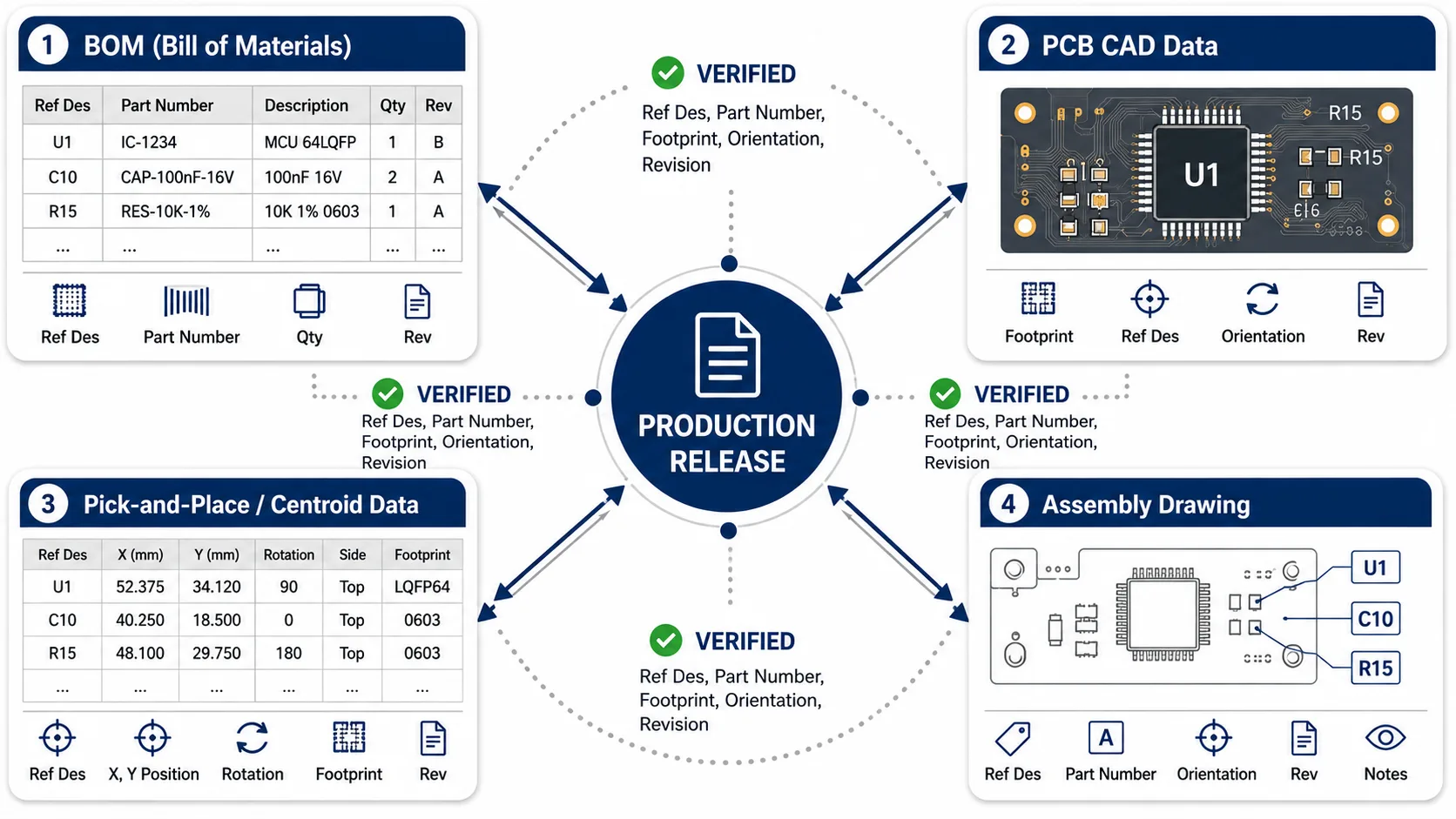
A resilient BOM is not useful if it does not match the rest of the manufacturing dataset.
At minimum, review consistency between:
BOM
What components are required?
PCB Design
Where are they used?
Pick-and-Place Data
Where should the machine place them?
Assembly Drawing
How should they be oriented and assembled?
Manufacturing Data
What revision of the PCB is being manufactured?
A mismatch can create:
This is why BOM validation should happen before production release.
18. BOM Optimization Does Not Mean Lowest Purchase Price
This distinction is particularly important in global sourcing.
Suppose Component A costs:
$1.00
and Component B costs:
$0.92
Component B appears cheaper.
But if B has:
then the $0.08 saving may be irrelevant.
A better evaluation considers total landed and operational cost.
Potential cost elements include:
This is why procurement decisions should not be based exclusively on the lowest quoted unit price.
19. A Practical BOM Optimization Workflow
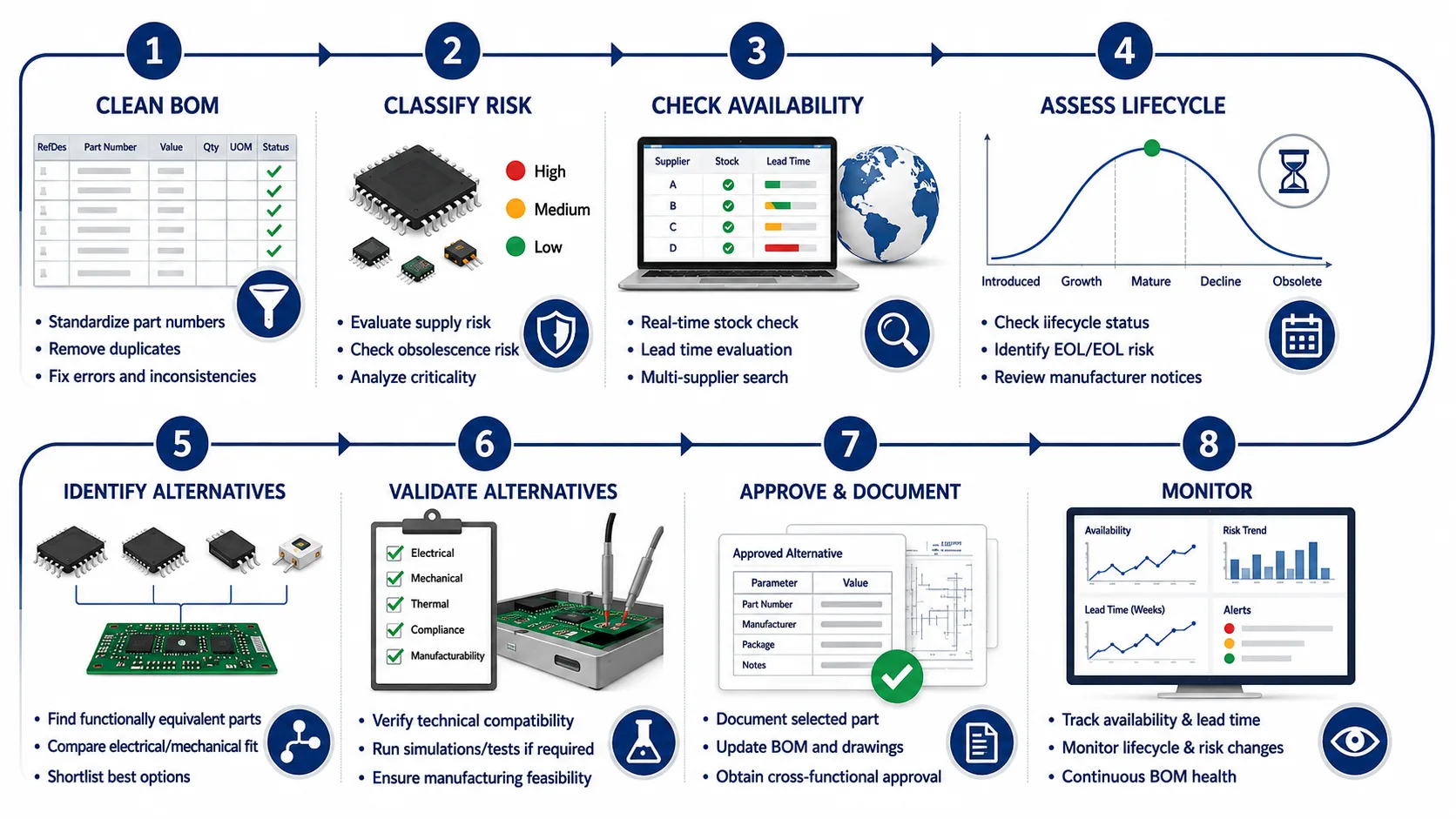
A disciplined workflow can be relatively straightforward.
Step 1 — Clean the BOM
Remove:
Step 2 — Classify Components
Separate:
Step 3 — Check Availability
Review:
Step 4 — Assess Lifecycle
Identify:
Step 5 — Identify Alternatives
Determine where qualified or candidate alternatives are practical.
Step 6 — Validate Alternatives
Check:
Electrical → Mechanical → Environmental → Manufacturing → Compliance
Step 7 — Document Approval
Record which alternates are:
Step 8 — Monitor
Supply-chain risk is dynamic.
A BOM should be reviewed periodically, particularly for long-lived products.
20. A Practical Pre-Production BOM Review
Before releasing a BOM for production, ask:
Component Identity
☐ Manufacturer part number verified☐ Description matches part number☐ Package verified☐ Datasheet available
Technical Requirements
☐ Electrical ratings verified☐ Tolerance verified☐ Temperature requirements verified☐ Mechanical requirements verified☐ Compliance requirements verified
Supply Risk
☐ Availability checked☐ Lead time checked☐ Lifecycle status checked☐ Single-source components identified☐ High-risk components identified
Alternatives
☐ Approved alternatives identified where appropriate☐ Alternate electrical parameters checked☐ Footprint compatibility checked☐ Mechanical compatibility checked☐ Manufacturing compatibility checked☐ Qualification status documented
Manufacturing Data
☐ BOM matches PCB revision☐ BOM matches pick-and-place data☐ Reference designators consistent☐ Assembly documentation consistent☐ Revision control verified
21. What a Procurement Engineer Should Ask Before Placing the Order
A good sourcing discussion should go beyond:
"What is your price?"
Ask:
Can you provide manufacturer traceability?
Especially for higher-risk components.
Is the component sourced through an authorized channel?
Where authenticity and traceability are important.
What is the current lead time?
And is the quoted lead time based on actual availability or manufacturer lead time?
Is the part active?
Don't assume current stock means long-term availability.
Are there qualified alternatives?
If yes:
Are they already approved, or do they require engineering qualification?
What is the MOQ?
A low unit price may become unattractive if MOQ creates excessive inventory.
Can the supplier support the expected production period?
A prototype supplier and a long-term production supplier may not necessarily be the same.
22. Representative Engineering Scenario
The $0.08 Component That Stopped Production
Consider a controller PCB using a specialized power-management IC.
The original BOM specifies a preferred manufacturer and part number.
During the prototype stage, the component is readily available.
Six months later, production planning begins.
The part is still technically active, but available inventory has become constrained and lead time has increased significantly.
The rest of the BOM is available.
The PCB fabrication capacity is available.
The assembly capacity is available.
Yet production cannot proceed because one critical component is missing.
What could have been done earlier?
During the NPI stage, the engineering team could have identified the component as:
High supply risk → single source → long-term production dependency
and initiated alternate qualification.
The objective would not have been to replace the preferred component unnecessarily.
It would have been to establish a validated second option before the shortage occurred.
That is the difference between:
reactive sourcing
and
supply-chain engineering.
23. How QUADRIONIX Can Support BOM Readiness
For customers outsourcing PCB manufacturing and assembly, BOM management is closely connected to the manufacturing workflow.
A practical engagement can include:
→ BOM Review
→ Component Availability Assessment
→ Supply-Risk Identification
→ Alternate Identification
→ Technical Compatibility Review
→ Procurement Planning
→ PCB Fabrication
→ PCB Assembly
→ Inspection & Validation
The exact scope depends on the customer's requirements and the level of sourcing responsibility assigned to the manufacturing partner.
The goal is straightforward:
Identify component-related manufacturing risks before they become production delays.
24. BOM Optimization Checklist — Executive Summary
Before releasing a BOM for production, confirm:
1. Every component is clearly identified.
2. Critical technical requirements are explicit.
3. High-risk components have been identified.
4. Lifecycle status has been considered.
5. Single-source dependencies are visible.
6. Qualified alternatives exist where practical.
7. Alternatives have been technically evaluated rather than assumed equivalent.
8. BOM, PCB and manufacturing data are synchronized.
9. Traceability requirements are defined according to product risk.
10. Revision control is established.
11. Procurement decisions consider total supply-chain risk—not only unit price.
12. The BOM is reviewed again as the product moves from prototype to production.
25. Conclusion
A Bill of Materials is not simply a purchasing document.
It is one of the most important connections between engineering design, manufacturing execution and supply-chain resilience.
A robust BOM makes critical requirements explicit, identifies supply dependencies, creates controlled sourcing flexibility and provides the information needed for procurement and manufacturing teams to make informed decisions.
The strongest approach is therefore not:
Choose a component → buy it → build the product.
It is:
Define the requirement → assess supply risk → identify options → qualify alternatives → control the BOM → monitor the supply chain.
For electronics products intended for sustained production, this approach can reduce the likelihood that a single unavailable component becomes a manufacturing bottleneck.
Ultimately, BOM optimization is not about having more part numbers or more alternate components. It is about having the right technical controls and the right sourcing options for the components that matter most.
That is what turns a BOM from a static parts list into a manufacturing and supply-chain risk management tool.
Ready to manufacture your electronics project?
Upload your Gerber files & BOM for automated DFM review, engineering feedback, and guaranteed delivery timelines.